«Decolonize Hellas/Decolonize the Balkans and Eastern Europe: a first contact»

Αυτή η εικόνα δεν έχει ιδιότητα alt. Το όνομα του αρχείου είναι εικόνα.png
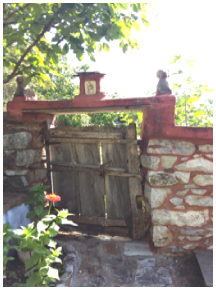
“Inner-Courtyard Door in Eratyra” @ F. Tsibiridou, October 2020

Webinar/workshop (19.5. 2021, 5-8 pm) University of Macedonia

Convenors: FotiniTsibiridou, Eleni Sideri, Ioannis Manos

Link https://zoom.us/j/8954478253
Meeting ID: 895 447 8253

Decolonize Hellas https://decolonizehellas.org/, Culture, Borders, Gender/LAB https://cbg-lab.uom.gr/en/, MA History, Anthropology and Culture in Eastern and South Eastern Europe https://www.uom.gr/en/mahac, CREABALK network https://cbg-lab.uom.gr/en/blog/networks/creabalk/

Program/Participants:
1. «Decolonize Hellas/Decolonize the Balkans and Eastern Europe: a first contact», Introductory remarks, by FotiniTsibiridou

2.“Frameworks of race and decolonisation: bridging post-Yugoslav spaces and Hellas”?, podcast by Catherine Baker

3.“Decolonial theory and practices in Eastern and South Eastern Europe”SpecialIssuepresentation by Polina Manolova  (on behalf of Katarina Kušić, Philipp Lottholz),

4.“The Return of the Colonial: Understanding the Role of Eastern Europe in Global Colonisation Debates and Decolonial Struggles”, Workshop presentation by Zoltán Ginelli (on behalf of Romina Istratii, Márton Demeter)

5.“Doing epistemic decolonization in Bosnia: peripheral selves”, reflections by Daniela Majstorovic

6.“Thessaloniki and Other Balkan Cities: Monuments, Memory, Representation, Affective Biographies, Cultural Geographies and Everyday Sensory Anthropology”, on the CREABALK network activities by Eleni Sideri (Pierre Sintès, Alessandro Galliccio, Olivier Givre, Fotini Tsibiridou)

Coordination of the panel/discussion: Ioannis Manos

Bios:

Catherine Baker is Senior Lecturer in 20th Century History(University of Hall). She is a specialist in post-Cold War history, international relations and cultural studies, including the post-Yugoslav region in a transnational and global context.Her research projects are connected by an overarching interest in the politics of representing, narrating and knowing about the past. Catherine’s current projects include relationships between war / the military and popular culture; the cultural politics of international events (including the Eurovision Song Contest); LGBTQ politics and identities since the late Cold War, including queer representation in media; and ‘race’ in the Yugoslav region. She has also researched interpreters / translators in peacekeeping.

Contact: Catherine.Baker@hull.ac.uk

Alessandro Gallicchio is Professor of contemporary art history at École supérieure des beaux-arts de Nîmes and adjunct faculty member at TELEMMe (AMU-CNRS) in Aix-en-Provence/Marseille. After he completed his PhD, he was a post-doctoral fellow at the Institut National d’Histoire de l’Art and Centre Pompidou (Labex CAP) and worked on the relations between art and urban space in contemporary Albania. Through an interdisciplinary approach, engaging a dialogue between art history, cultural geography, architectural history, and anthropology, he launched with Pierre Sintès MonuMed, an art and social sciences project focused on the new practices of artistic and architectural monumentalization. In 2020 he was André Chastel fellow at the Villa Medici in Rome and in 2021 he is researcher in residence at École Françaised’Athènes. As an independent curator, he collaborates with international art centers and museums and he presented Rue d’Alger exhibition in Manifesta 13 Marseille Les Parallèles du Sud Biennial.

Contact: alessandro.gallicchio@gmail.com

Zoltán Ginelliis a PhD Candidate in Geography at EötvösLoránd University. His research and teaching focuses on critical geography, historical and political geography, and the geographies of knowledge, but he also specializes in the history, sociology and philosophy of science, science communication, and science and technology studies. His forthcoming dissertation book is a transnational history of the “quantitative revolution” in Cold War geography, and his current research reinterprets colonial history and postcolonialist thought in Eastern Europe. Since 2015, he has been a part-time Research Assistant in the international research projects “1989 After 1989” and “Socialism Goes Global” at the University of Exeter. Zoltán is devoted to fighting social injustice, promoting progressive teaching and critical geography in Hungary, for which he runs two blogs, the Forum for Hungarian Critical Geographers (https://www.facebook.com/kritikaifoldrajz) and Critical Geographies (https://kritikaifoldrajz.hu). Whenever he can, Zoltán enjoys academic reading, blog writing, traveling, and art, while on gloomy evenings plays the blues on his prized guitar, an American Fender Stratocaster.

Contact: zginelli@gmail.com

Olivier Givre, is anthropologist and Associate Professor at the University Lumière-Lyon2 (France). He works mainly in the Balkans (Bulgaria, Greece and other countries) on several fields: ritual and religious dynamics, memoryand heritage processes, border and territory issues. His present research interests concern ecological anthropology, sensory anthropology and research-creation. He is the cofounder of the CREABALK – Creative Balkans network. https://univ-lyon2.academia.edu/OlivierGivre

Contact: olivier.givre1@univ-lyon2.fr

Danijela Majstorović (MA 2003, Ohio University; PhD 2006 University of Banja Luka) is a Professor of English Linguistics and Cultural Studies at the University of Banja Luka’s English department. She is also a Humboldt Experienced Research Fellow studying social protests and third-wave migrations in and from post-2015 Western Balkans at Justus Liebig University in Giessen, Germany. She was a visiting researcher at Lancaster University in 2006, a Fulbright fellow at UCLA in 2012-2013, a Canada Research Chair in Cultural Studies Postdoctoral Fellow at the University of Alberta in 2014 and a visiting researcher at Indiana University in 2016. Her research interests involve critical discourse analysis, critical theory, feminist theory, post- and decolonial theory, and post-Dayton Bosnia. She published over 25 journal articles, co-authored Youth Ethnic and National Identity in Bosnia and Herzegovina (Palgrave, 2013), authored Diskursiperiferije (Biblioteka XX vek, Belgrade) and Diskurs, moć i međunarodnazajednica (FF Banja Luka, 2007)She edited Living With Patriarchy: Discursive Construction of Gendered Subjects Across Cultures (John Benjamins, 2011), U okriljunacije  (CKSP Banja Luka, 2011) and Kritičkekulturološkestudije u postjugoslovenskomprostoru (Banja Luka, 2012). Her new book Discourse and Affect in Post-socialist Bosnia and Herzegovina: Peripheral Selves is due to come for Palgrave in 2021.

Contact: kulturoloskestudije@gmail.com

Polina Manolova holds a PhD in East European Studies from the University of Birmingham, UK. She teaches under- and postgraduate courses in migration, borders and power asymmetries across Europe. Her research focuses on intra-EU migrations and pathways of incorporation of east European migrants in Germany. Furthermore, she is interested in exploring the spread of Western modernity and (self) Orientalisation narratives in postsocialist Europe. She is a member and co-founder of the Dialoguing Posts Network. Currently, she is based in the University of Tuebingen (Germany). 

Contact: polinamanolova@gmail.com

Ioannis Manos is Αssociate Professor in the Department of Balkan, Slavic and Oriental Studies, at the University of Macedonia in Thessaloniki. He studied History and Archaeology at the Aristotle University of Thessaloniki and Social Anthropology at the Universities of Hamburg, Germany and Sussex in the UK. He worked as a Full Time Visiting Research Fellow at the Sussex European Institute, (Sussex University) holding a Marie Curie scholarship from the European Union. He is a member of the editorial collective of the Teaching Anthropology Journal (Royal Anthropological Institute) and co-convener of the EASA-Teaching Anthropology Network. He is a founding member of the academic network for Anthropology and the Balkans «Border Crossings», member of the Advisory Board and co-editor of its publication series. His main research interests focus on Southeast Europe and his publications include articles and co-edited volumes on geopolitical borders and border regions, nationalism and identity politics, anthropology of dance, migration and the methodology of teaching anthropology.

Contact address: imanos@uom.edu.gr

Eleni Sideri, holds a PhD in social anthropology from SOAS/University of London. She completed three master degrees in Social Anthropology, Near and Middle Eastern studies (SOAS) and sociolinguistics (AUTH). She holds also a degree in Film Studies (AUTH). She did fieldwork in the Caucasus, in Bosnia-Herzegovina and in Greece. Her academic interests include diasporas, transnational migrations, mobilities, tourism and post-conflict urban development, language and sociolinguistics, post-socialist societies and cinemas, film and TV narratives, anthropology of media, experimental ethnographic writing, digital technologies. She co-edited the volume Religions and Migrations in the Black Sea (2017) Macmillan/Palgrave.

Contact: elasideri@uom.edu.gr

Pierre Sintès is Associate Professor of Cultural and Social Geography at Aix- Marseille University, France. His research is about the social and political transformations related to migration, diaspora and mobility in Greece and other Balkan’s countries. He focuses more particularly on discourses of identification, and social and ethnic affiliations and relationships between identity and space. His recent publications (in English) include Chasing the Past: Geopolitics of Memory on the Margins of Modern Greece (Liverpool University Press, 2020), Social Practices and Local Configurations in the Balkans (European University of Tirana Press, 2013) and Borders, Mobilities and Migrations. Perspectives from the Mediterranean19–21st Century (Peter Lang, 2011).He is the cofounder of the CREABALK – Creative Balkans network.

Contact: Pierre.sintes@univ-amu.fr

Fotini Tsibiridou is Professor of Social Anthropology at the Department of Balkan, Slavic and Oriental Studies at the University of Macedonia and acting Director of the Laboratory for the Study of Culture, Borders and Gender. She has done fieldwork in a former refugee village and among the Pomaks in Greek Thrace, in Macedonian and Peloponnese villages and the Sultanate of Oman. She has also researched nationalism and multiculturalist discourses and practices in Greek Thrace, as well as gender, citizenship and creative counter publics in Istanbul. Currently (since 2018) she is researching two topics: post-Ottoman religiosity and gendered subjectivity in the frame of post-colonial critique (Balkans, Turkey, the Middle East), and feminist and other decolonizing methodologies deployed in creative protests and resistance practices in Mediterranean cities in the way to/of cosmopolitics. She is the cofounder of the CREABALK – Creative Balkans network.

Contact: ft@uom.edu.gr


Conference ‘2020 an extraordinary year in pandemic times: Academic experiences and research practices from the Balkans’

The Department of Balkan Slavic and Oriental Studies, the “History of Eastern and Southeastern Europe LAB” and the “Culture-Borders-Gender /LAB” co-organize a conference entitled “2020 an extraordinary year in pandemic times: Academic experiences and research practices from the Balkans“, which will take place online on the zoom platform on 23rd and 24th of January 2021.
The link of the conference will be announced on Friday 22/1/2021
The conference is open to the public.
To register, enter your details on the platform: https://forms.gle/BYgwBWDFTdM7QpU6A

Call for Papers – Multimedia Anthropology Lab

CONFERENCE DETAILS & SUBMISSION: https://www.uclmal.com/conferences

How are ethnographic encounters with alterity mediated and transformed by multimedia technologies? Drawing on the insights and questions raised by both material culture studies and the ontological turn, we aim to facilitate a global conversation on the concepts, forms and mediums through which knowledge is produced and shared. This conference is hosted by UCL Multimedia Anthropology Lab, an interdisciplinary research network aimed at developing innovative methods for anthropological practice.

 CONFERENCE THEME: KNOWLEDGE OTHERWISE

Anthropological encounters with others have led us to question ideas previously taken as given. Concepts of family, society, culture, nature, and what it means to be human have all been subject to revision. When these critiques are directed towards knowledge itself, the different ideas people have about what knowledge is and how it is shared have led us to question the theories and practices through which we seek to know. Proponents of the ontological turn (Holbraad & Pedersen 2017) have developed these ideas to call for an anthropological project that is radically experimental, drawing on ethnographic encounters with alterity to critically interrogate the analytical concepts that inform our research.

At the same time, material culture studies has pointed towards the important role of materials in the articulation of human knowledge. The materials through which ethnographic encounters are translated into knowledge – as text, image, sound, performance, simulated sensory immersion, etc – shape the ways in which these encounters are experienced by others, and the conceptual affordances they present. We examine how ethnographic encounters with alterity can disrupt not only the conceptual frameworks of anthropology, but also the material practices through which knowledge is produced and communicated, and explore how anthropological knowledge can be both thought and made otherwise.

These questions are especially pertinent in the context of a global pandemic, which has changed the ways we encounter and communicate with others, disrupting diverse forms of knowing and doing. In parallel to this conference, UCL MAL has initiated a partnership with the Kuñangue Aty Guasu, an annual meeting of Guarani & Kaiowá indigenous women in Brazil, which this year will take place online. The translation of this event into an online format allows us to reflect on the parallels between the knowledge practices of indigenous communities and those of anthropologists, and invites us to consider each as a variant (Maniglier 2016) of the other. If we consider the indigenous meeting as an Other kind of conference, and the conference as an Other kind of indigenous meeting, what can we learn about conferences, indigenous meetings, and knowledge itself?

This conference seeks to explore how knowledge can be cast otherwise, in concept, method, and form. We consider how different concepts of knowledge entail different forms of practice, and how different materials and techniques enable different conceptual encounters. What are the conceptual affordances of multimedia encounters with alterity? What is the relation between sensory experience and conceptual movement? Can encounters with alterity be simulated in VR? Can we do theory through film or sound? How can AI traverse multiple ontologies, and what does that mean for concepts? How can websites, social media, and other digital platforms disseminate research findings? Can research be presented as performance? How can an exhibition be posed as an experiment? What is the concept of the concept?

If we are to seriously question the concepts and methods through which we produce knowledge, then our commitment to being radically experimental must go beyond a critique of analytical tools and extend to a thorough interrogation of the methods and mediums through which research is produced and presented.   

SUBMISSION GUIDELINES

UCL MAL invites contributions from academics and practitioners across disciplines who engage with these questions, and experiment with innovative approaches to conducting and presenting research. We welcome submissions in any format (accompanied by a written abstract) and encourage contributors to interpret our theme as broadly as possible. We are particularly interested in contributions which explore the following topics/methods:

VR & 360 VIDEO | IMMERSIVE ENVIRONMENTS | SONIC ETHNOGRAPHY | NET ART | PERFORMANCE | ETHNOGRAPHIC FILM | EXHIBITION AS RESEARCH | PROJECTION MAPPING | SCULPTURE | MULTISENSORY MEDIA | INTERACTIVE INSTALLATION | PHOTOGRAMMETRY | AI & MACHINE LEARNING | DIGITAL ANTHROPOLOGY | & MORE

Please submit abstracts of no more than 300 words, and any multimedia materials that are relevant to your work, by 23:59 GMT on Wednesday the 2nd of December 2020. Please use the following submission link: www.uclmal.com/conferences  

CONFERENCE PROGRAMME & KEYNOTE SPEAKERS
The conference will take place online on the 12th, 13th & 14th of January 2021, and will be accompanied by an online exhibition of multimedia works. Each day will begin with keynote contributions from academics and practitioners whose theory and practice invite us to think otherwise, followed by thematic panels where experimental research approaches and their implications for theory will be debated in more depth. The following keynote speakers have been confirmed so far:

Ludovic Coupaye | Lecturer in Anthropology | UCL
Haidy Geismar | Professor of Anthropology | UCL
Jaqueline Aranduhá | Guarani & Kaiowá Indigenous Leader

The conference is free to attend, but please register for tickets on Eventbrite: https://www.eventbrite.co.uk/e/multimedia-encounters-experimental-approaches-toethnographic-research-tickets-127591845645  

UCL MULTIMEDIA ANTHROPOLOGY LAB
UCL MALis an interdisciplinary research network that explores innovative methods for conducting and presenting ethnographic research. We have organised several seminar series and exhibitions at UCL and have presented work and ideas at Somerset House, Modern Art Oxford, and the Tate Modern. Founded in 2017 by doctoral research students at UCL Anthropology, today MAL is composed of over 50 members around the world, with representatives from anthropology, art, computer science, sound studies, film, and human rights. MAL has been generously supported by UCL Anthropology, the Institute of Advanced Studies, UCL Grand Challenges, and the British Museum.

If you would like to learn more about MAL or our activities please visit our website at www.uclmal.com or contact us directly at info@uclmal.com.   

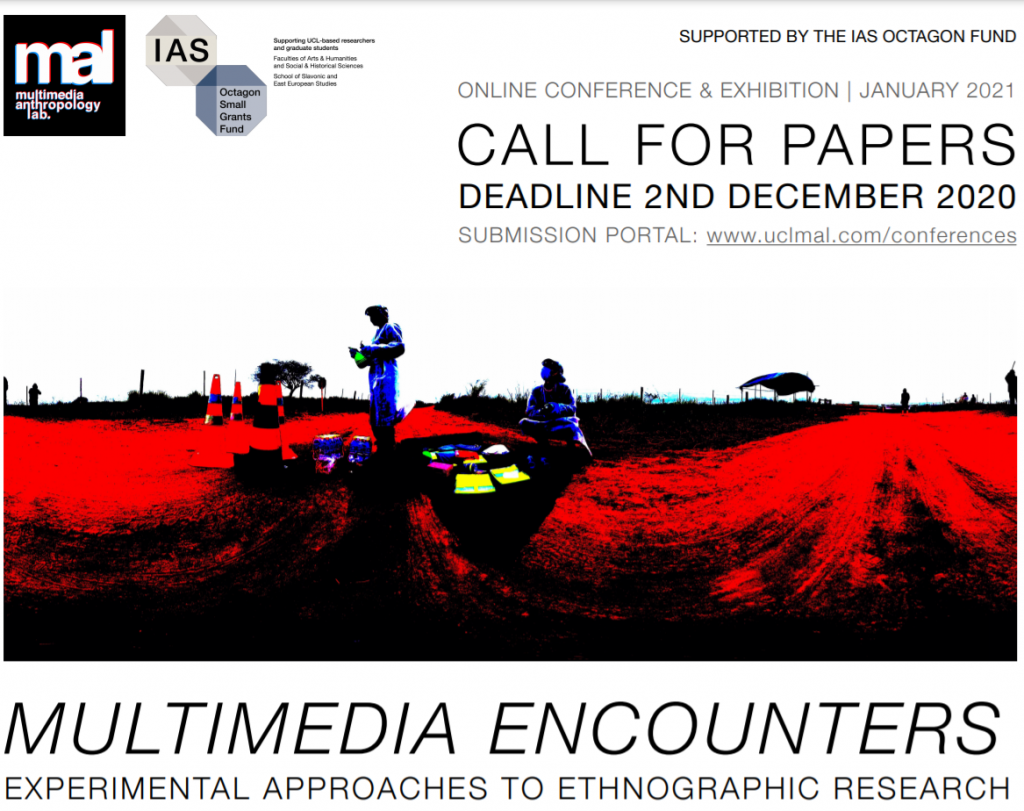
 The image above depicts an anthropologist and research assistant sanitising Covid supplies before delivering them to Guarani & Kaiowá indigenous communities in Brazil. The scene, made possible by the presence of a 360 camera, illustrates the hyper-awareness of anthropological encounters in a Covid context and invites us to reflect on the ways in which encounters are mediated – whether by recording technologies, digital tools for remote communication or by PPE.  


PERFORMING NATIONAL IDENTITY: COMMEMORATIONS, INSTITUTIONS, AND RITUALS

Conference for the celebration of the bicentennial of the 1821 Greek Revolution

September 24-26 (new date), 2021, Thessaloniki, Greece

Co-organized by:

Folklore and Ethnological Museum of Macedonia-Thrace
Department of Balkan, Slavic and Oriental Studies, University of Macedonia
Laboratory for the Study of Culture, Borders and Gender, (Department of BSΟS, University of Macedonia)
Department of Music Science and Art, University of Macedonia
Section of Folklore, Department of History and Archaeology, University of Ioannina  

CALL FOR PAPERS

It is common knowledge in the social sciences that collective identities are neither eternal nor fixed. They are fluid, historically shaped, and object of management and negotiation by collective and individual actors. It is also common ground that national identities have been formed during modernity when the nation-state emerged as an essential and dominant political organization unit.

The outset of the relationship between the nation’s collectivity and the state’s territoriality is traced in the historical period of the industrial and urban revolution in Europe. However, this relationship is redefined continuously and shapes, historically, the dominant narrative around national identity, national origin, and the way the nation and the modern collective self are constructed.

In Greece, despite the debates and different perspectives, the view of the pre-existing cultural community of Hellenism is commonly accepted, and it is reconstructed on a new ground after the national liberation struggles and the establishment of the modern Greek state.

The conference explores ways of constructing the community through performative expressions of collective identities, as they become visible in the institutional discourse, public events, rituals, and symbols used by the state and citizens to (re)produce the nation. These are contexts and processes in which experiences of the self, the collective, the national belonging, and the citizen are produced through interactions, hegemonic discourses, experiences of power, symbolic meanings, and embodied practices.

The concept of performance is chosen as the appropriate theoretical and analytical framework to study complex and multilevel forms of social action and different cultural practices that shape, reproduce or even challenge the multiple discourses and embodied ways in which national identity is constructed.

The conference will host presentations (in Greek or English) and discuss the issue of national identity, focusing on institutions’ role and various forms of performance in the context of institutional discourse, social interaction, and various bodily practices. Indicative thematic areas are as follows:

• Collective, state, and private institutions (e.g., educational institutions, museums, associations, cultural associations)

• Religion, rituals, celebrations, and symbols

• Communities, borders and boundaries

• Space, architecture, monuments, and memory

• Family, kinship, and gender

• Material culture, nutritional practices, customary life

• Language, arts, dance, music, songs, costumes, sports

• Technology, media, digital and audiovisual culture

The invitation is aimed at social sciences and humanities researchers (Social Anthropology, Folklore, History, Sociology, Cultural Studies, etc.) who employ case studies and critical thinking to highlight the meanings and limitations, and dynamics of national identity performances in contemporary times.

Submission of applications – Information

• Summary of up to 250 words (in Greek or English) with the title of the presentation

• Contact details: name, scientific status, email address

• Conference languages: Greek, English

Deadline for the abstract submission: November 30, 2020

E-mail: lemmth.vsas.synedrio2021@gmail.com

Eleni Gelani, PhD Candidate in Folklore and Social Anthropology, Aristotle University of Thessaloniki

Scientific Committee

  • Vassilis Nitsiakos, Professor of Social Folklore, University of Ioannina
  • Fotini Tsibiridou, Professor of Social Anthropology, University of Macedonia
  • Eftichia Voutira, Professor of Social Anthropology, University of Macedonia
  • Eleni Gavra, Professor of Housing and Cultural Heritage in the Balkans and the Black Sea, University of Macedonia
  • Alexandra Ioannidou, Professor of Modern and Contemporary Slavic Literatures and Culture, University of Macedonia
  • Eleftheria Deltsou, Associate Professor of Social Anthropology, University of Thessaly
  • Ioannis Manos, Associate Professor of Social Anthropology, University of Macedonia
  • Stavroula – Villy Fotopoulou, Head of the Directorate of Modern Cultural Heritage, Ministry of Culture
  • Marilena Papachristoforou, Associate Professor of Social Anthropology and Folklore, University of Ioannina
  • Eleni Kallimopoulou, Assistant Professor of Ethnomusicology, University of Macedonia
  • Eleni Sideri, Assistant Professor of Social Anthropology, University of Macedonia
  • Stratos Dordanas, Assistant Professor of Modern and Contemporary History, University of Macedonia

Organizational committee

  • Vassilis Nitsiakos, Professor of Social Folklore, University of Ioannina
  • Ioannis Manos, Associate Professor of Social Anthropology, University of Macedonia
  • Eleni Kallimopoulou, Assistant Professor of Ethnomusicology, University of Macedonia
  • Ioannis Drinis, Head of the Department of Intangible Cultural Heritage and Intercultural Affairs, Ministry of Culture
  • Eleftheria Deltsou, Associate Professor of Social Anthropology, University of Thessaly
  • Elina Kapetanaki, Dr. Social Anthropology, Postdoctoral Researcher, University of Macedonia
  • Eleni Bintsi, Head of LEMM-TH
  • Eleni Gelani, PhD Candidate in Folklore and Social Anthropology, AUTh.
  • Sotiris Souloukos, PhD Candidate in Religious Studies, AUTh.

CONFERENCE: 2020 an extraordinary year in pandemic times: Academic experiences and research practices from the Balkans

DEPARTMENT FOR BALKAN, SLAVIC AND ORIENTAL STUDIES
UNIVERSITY OF MACEDONIA
23-24 January 2021

The Department of Balkan, Slavic and Oriental Studies of the University of Macedonia, seeking the economic and social consequences of the Coronavirus crisis in Greece and the Balkans, is organizing a two-day conference on  January the 23-24 2021, entitled: “2020 an extraordinary year in pandemic times: Academic experiences and research practices from the Balkans”.

The pandemic that broke out in the winter of 2020 and affected the whole world brought major changes in all areas of human activitylong, had so many victims and radically change people’s relationships and lives. Documenting the pandemic and its impact is still a work in progress.Thereofore, there is a need to capture the methodology and ethics associated with issues of research, teaching and everyday survival in the time of the pandemic. A comparative assessment by the Balkan countries is considered useful and necessary one year after the first confinement. We are looking to assess in a comparative way, theimportance of social science research, as it took place in the neighboring Balkan countries and the wider region. Did the pandemic contribute to the development of more networks and partnerships or not? Are there scientific fields favoured by  the conditions of the pandemic? What are the financial and communication tools developed? Does it have a more aggravating effect on other fields? How  did COVID-19 shape  the academic space and the universities themselves within the conditions of in tele-working? What the impact on the relationships within the university community, between students and professors or within each category? What are the implications for students and their studies, research interests, employment and daily survival?

The purpose of this conference is to fill this gap, i.e. to make a description and assessment of the pandemic in academia and social research (political science, sociology, economics, social anthropology, communication, psychology, cultural studies, new technologies and News Inside.) Through a comparative look of the Area studies in Eastern and Southeastern Europe as well as their neighborhoods, the conference is particularly interested in the participation of young scientists and research teams. Selected conference papers, after evaluation, will be published online.

Those interested in participating should send a presentation title, contact details and a brief description of the topic to emails vvlasidis@uom.gr, elasideri@uom.edu.gr until October 15, 2020. Researchers whose topics will be accepted will be notified by mail on October 30, 2020.

The conference will be held on 23-24 January 2021 with a physical presence at the University of Macedonia (but there will be the possibility of hybrid participation) unless the health protocols prohibit physical presence, at which time it will be held online.

INDICATIVE  THEMES
-Digital university, the new university
-Financing under the shadow of COVID-19
– Transnational collaborations, networks, research and pandemic
-Methods and methodology of social sciences in the pandemic
-Teaching and electronic platforms
-Beyond COVID research
-Study education at the time of COVID
-Post-COVID university
-Universitas, educational institution and academic communities
-Gender discrimination and equality practices during the pandemic
-University and society: strengthening or reducing the links between them

Culture-Borders-Gender /LAB: co-organizing the conference

The International Conference Cultural Neighborhoods and Co-productions In South-East Europe and Beyond 4th Conference on Contemporary Greek Film Cultures will be held digitally on the Zoom platform between 27-28 / 8/2020. The conference is organized by the Department of Balkan, Slavic and Oriental Studies and the Thessaloniki Film Festival as well as the Study Group of Contemporary Greek Film Cultures.

Through the different aspects of co-productions, the conference will explore how Greek cinema is connected to other regional cinemas, such as those of Southeastern Europe, and how these connections form ‘cultural neighborhoods’. In addition, it will explore how these links relate to the EU cultural policies as well as the formation of a European identity.

For the digital attendance of the conference there will be an announcement on the website https://contemporarygreekfilmcultures4.blogspot.com/ after 20/8.
The detailed programme is found at
https://www.dropbox.com/s/e6yx49daq6q1gjh/PROGRAM_1672020eng.docx?dl=0

For the Organizing Committee
Eleni Sideri
Assistant Professor

Distribute2020_Greek edition

The Society for Cultural Anthropology and the Society for Visual Anthropology are excited to bring to you its second carbon-neutral biennial conference: Distribute 2020, which will take place on May 7, 8, and 9, 2020.

Like its previous iteration (Displacements 2018), Distribute 2020 will be virtual and distributed: virtual in that it will be anchored by a dedicated conference website streaming prerecorded multimedia panels; and distributed in that presenters and viewers from across the globe will participate in the conference via in-person local “nodes.”

Distribute 2020 plans to offer three full days of streamed audio-visual panels and in-person local nodes where participants can gather with others to view the conference and join in related activities like workshops, art exhibitions, and dinner salons. Our goal is a low-cost, highly accessible, carbon-neutral conference that might pave the way for rethinking the mega-conference model.

Our 2020 theme, “Distribute” is meant to operate on multiple levels. Distribute is an analytic lens to study the dispersal, diffusion, and (re)distribution of humans and nonhumans, and of resources, practices, and ideas. Distribute is also a call or imperative – redistribute! – to prompt more ethically and politically engaged forms of scholarship.

Distribute 2020 asks: How can we turn our collective anthropological attention to questions of distribution and redistribution, and to the economics and politics, the violence and poetics of allocation and dispensation, movement and migration, organizing and repositioning? And, in so doing, how might we generate forms of publicly engaged scholarship that reach beyond the traditional confines of academia?

Distribute 2020 joins a rising tide of voices addressing such critical questions, offering an anthropological response and a means to imagine another anthropology into existence.

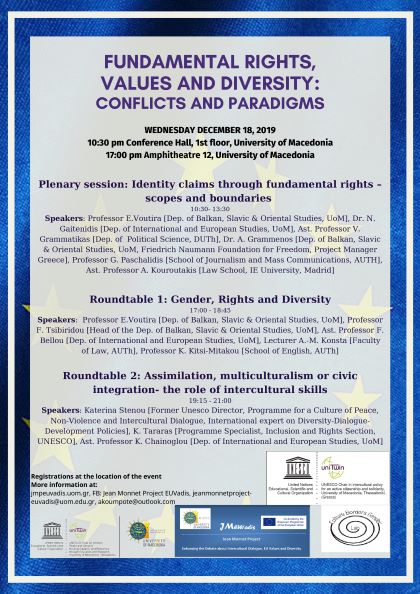
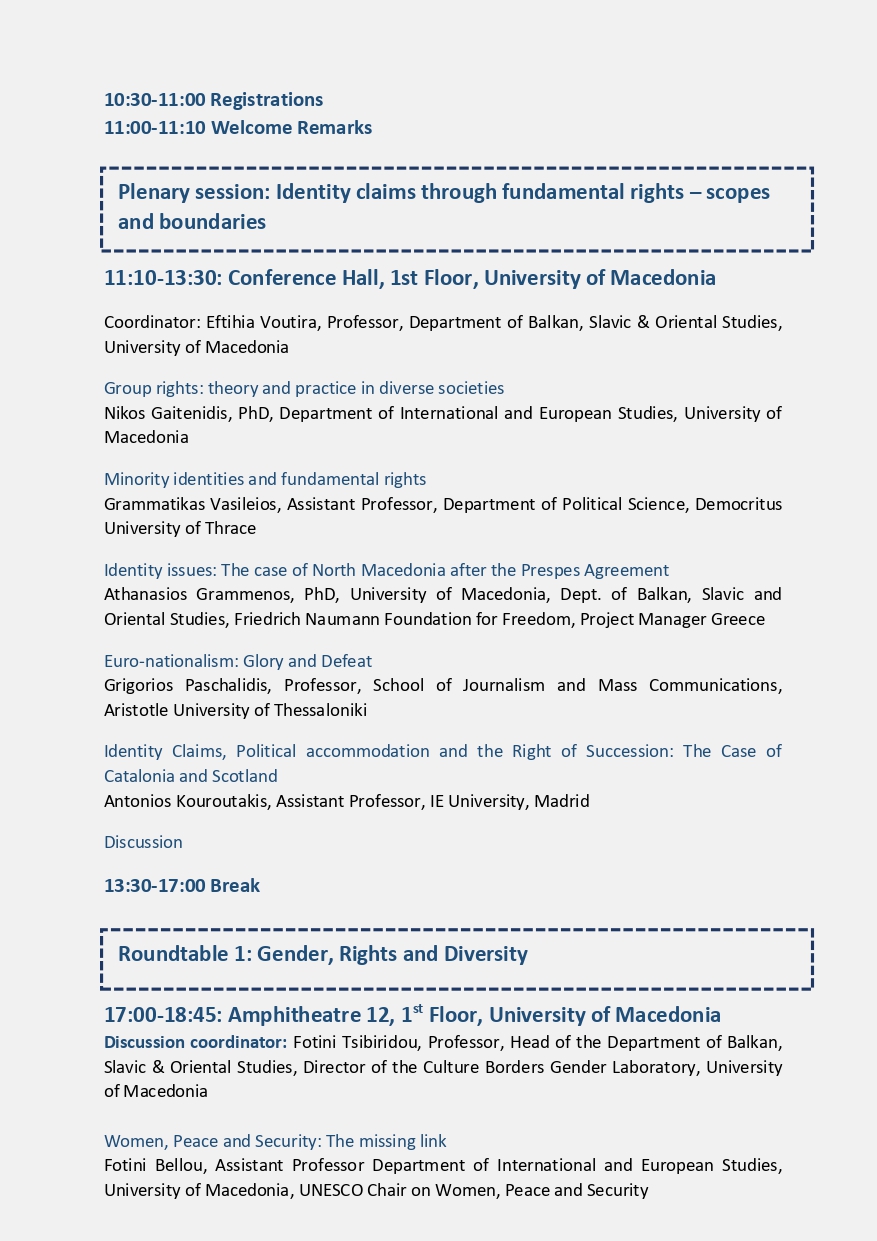
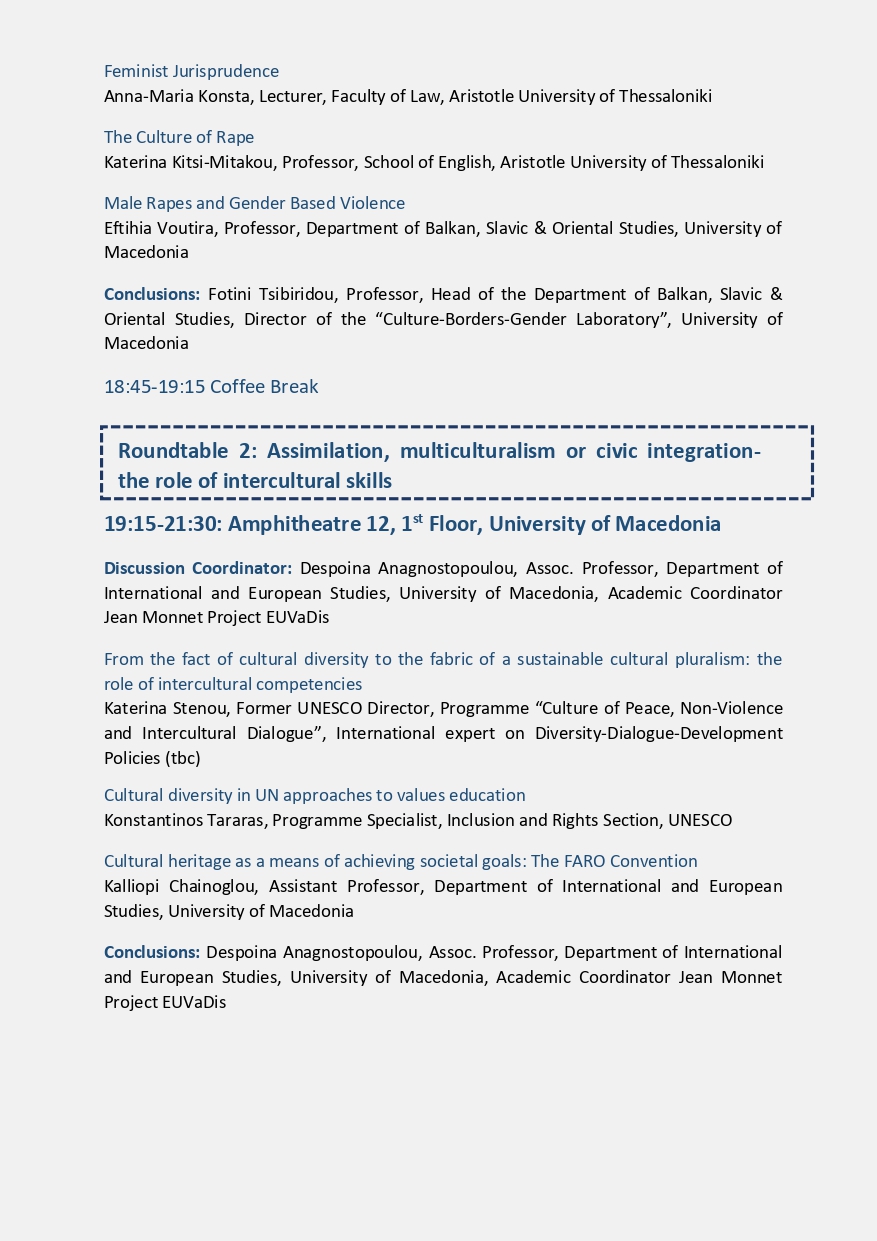
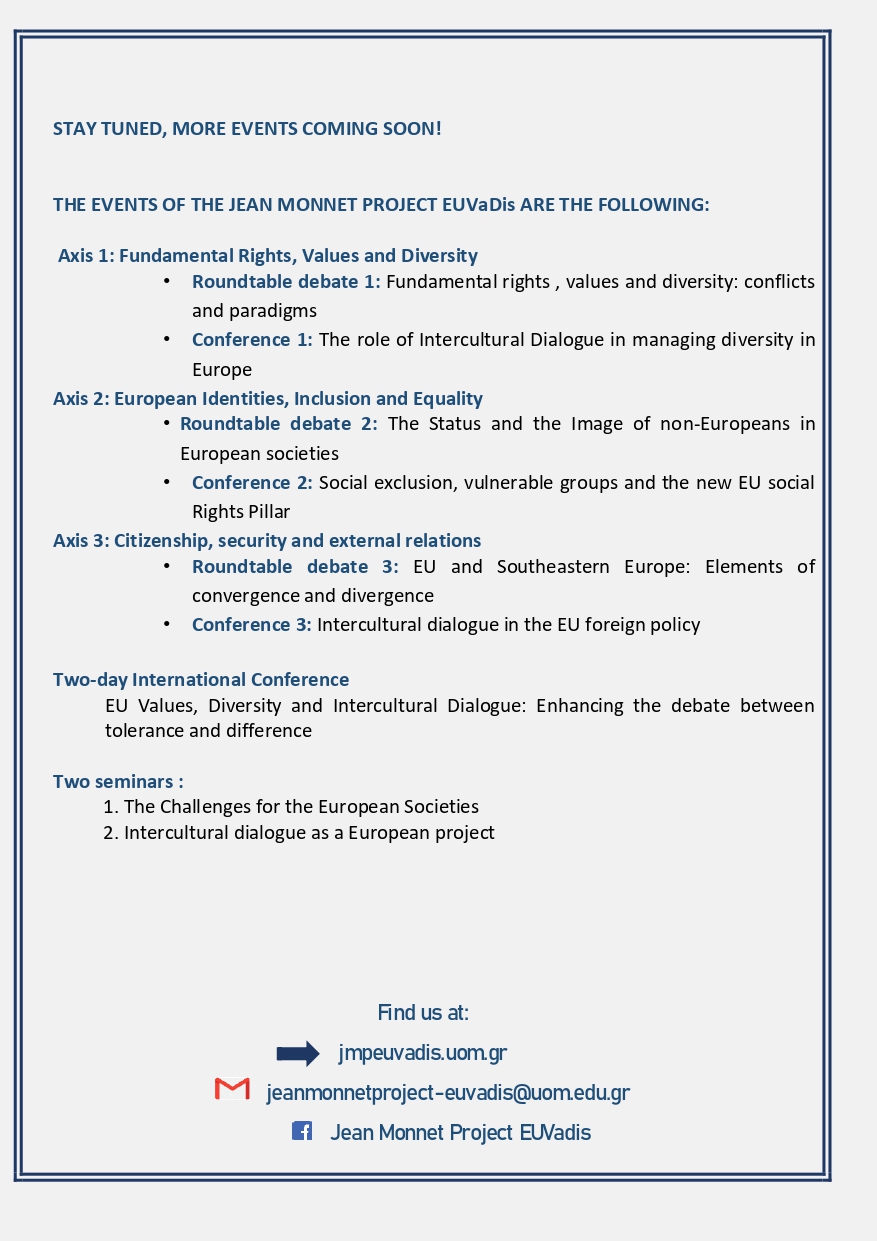
Fundamental Rights, Values and Diversity: Conflicts and Examples

Roundtable discussion co-organised by cbg-lab and the Jean Monnet project «Enhancing the Debate about Intercultural Dialogue, EU Values and Diversity» of the Department of International and European Studies, University of Macedonia.

More informations:
https://cbg-lab.uom.gr/blog/2019/12/16/%ce%b8%ce%b5%ce%bc%ce%b5%ce%bb%ce%b9%cf%8e%ce%b4%ce%b7-%ce%b4%ce%b9%ce%ba%ce%b1%ce%b9%cf%8e%ce%bc%ce%b1%cf%84%ce%b1-%ce%b1%ce%be%ce%af%ce%b5%cf%82-%ce%ba%ce%b1%ce%b9-%cf%80%ce%bf%ce%b9%ce%ba/